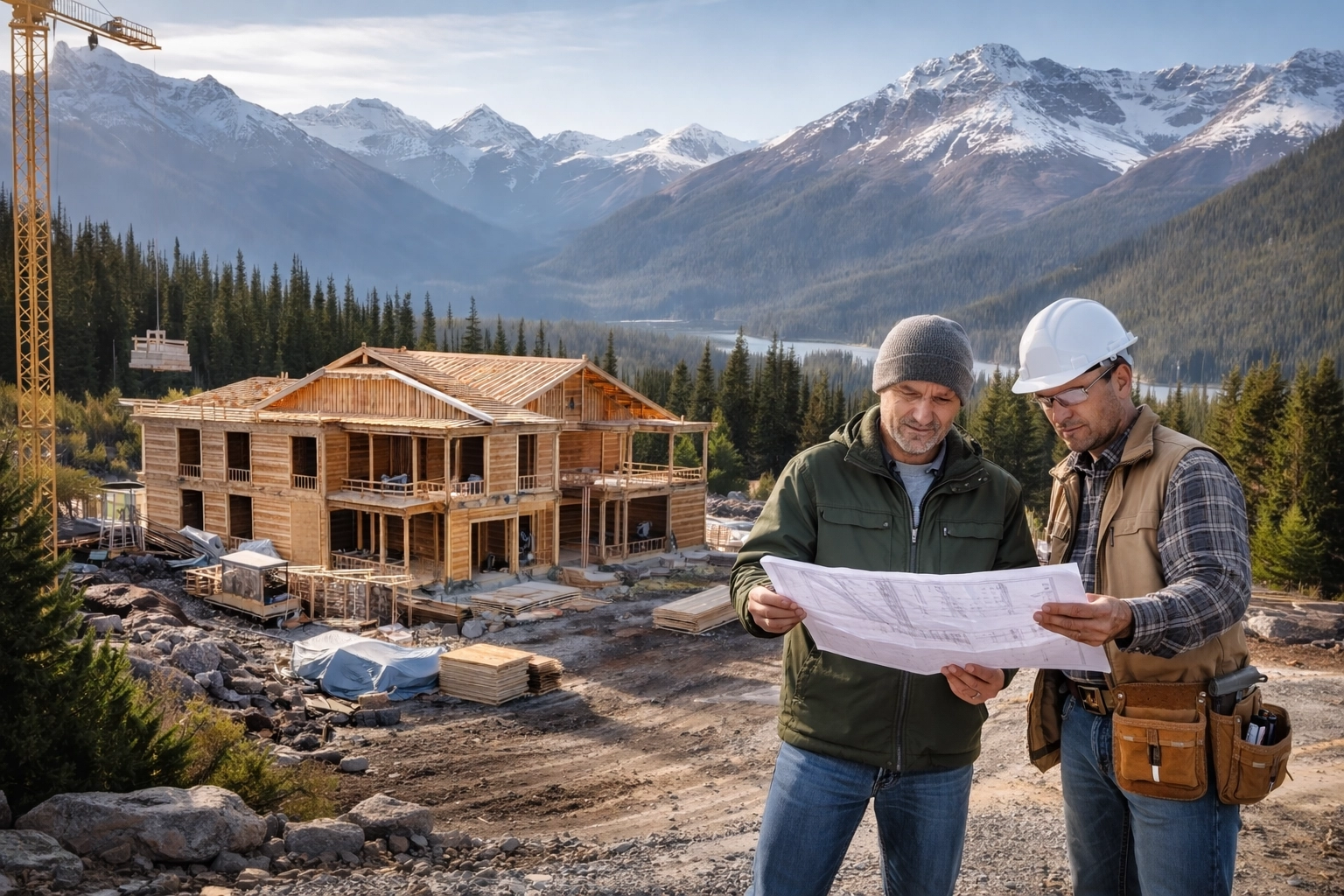
Whether you're a contractor breaking ground on a new commercial building or a homeowner finally starting that dream addition, there's a gap in your coverage you might not know about.
Your standard property insurance? It covers what's already there. But what about the structure that's becoming there?
That's where Builders Risk Insurance comes in. And in Alaska, where weather, distance, and rugged terrain add extra layers of challenge, this coverage isn't just nice to have: it can save your entire project.
Let's break it down in plain terms.
What Is Builders Risk Insurance?
Builders Risk Insurance is essentially Course of Construction insurance.
Think of it as a temporary safety net that exists from the moment you break ground until the project is complete (or the building is occupied).
It covers things like:
- The structure itself (at every stage of construction)
- Building materials on-site
- Materials stored off-site
- Materials in transit to the job site
- Temporary structures and scaffolding
- Installed fixtures and equipment
Without it, a fire, theft, windstorm, or other disaster could wipe out months of work: and leave someone holding the bill.
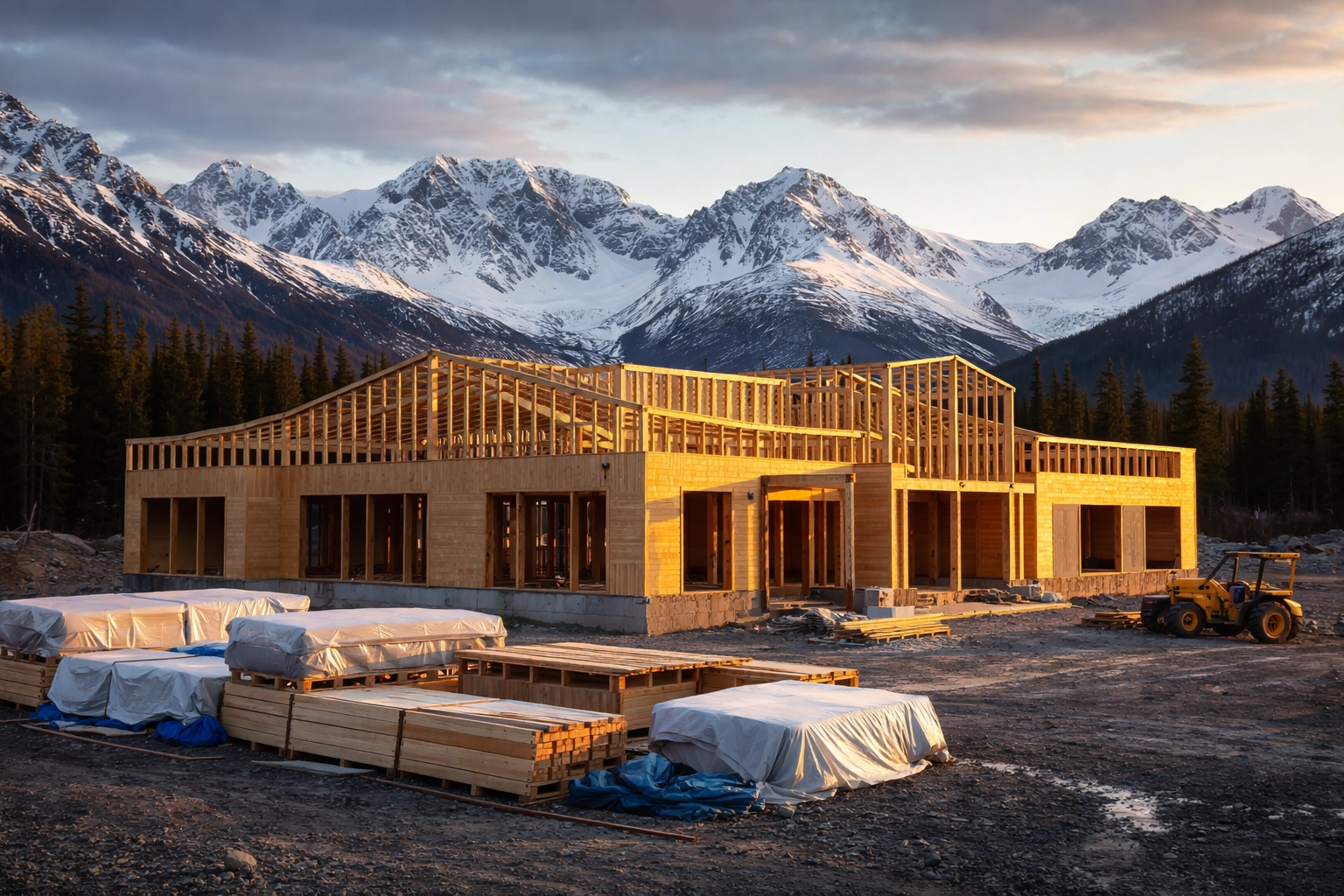
What Does Builders Risk Actually Cover?
Coverage can vary depending on the policy, but most Builders Risk policies in Alaska include protection against:
- Fire and smoke damage
- Theft and vandalism (not by employees)
- Wind, hail, and storm damage
- Lightning strikes
- Damage from vehicles or aircraft
- Debris removal after a covered loss
- Earthquake damage (often added in Alaska due to seismic activity)
Some policies also cover "soft costs": things like architect fees, permit costs, and loan interest if a covered loss delays your project.
Policies typically come in three-month, six-month, or 12-month terms, with options to extend if the project runs long.
For Contractors: Why Builders Risk Matters to Your Business
If you're a contractor in Alaska, Builders Risk Insurance isn't just smart: it's often required.
Many project owners, lenders, and general contractors require proof of Builders Risk coverage before work begins. Without it, you may not get the contract.
But beyond the paperwork, here's why it matters to your bottom line:
You're responsible for more than your own tools
Your business insurance in Alaska probably covers your tools and equipment. But what about the building materials sitting on-site overnight? What about the half-framed structure that's exposed to the elements?
If those get damaged or stolen, someone has to pay to replace them. Without Builders Risk, that someone might be you.
Alaska job sites come with extra risk
Remote locations. Unpredictable weather. Long supply chains. Materials sitting on-site for weeks waiting for weather windows.
These are normal realities for Alaska contractors: and they all increase exposure. Builders Risk helps cover that gap.
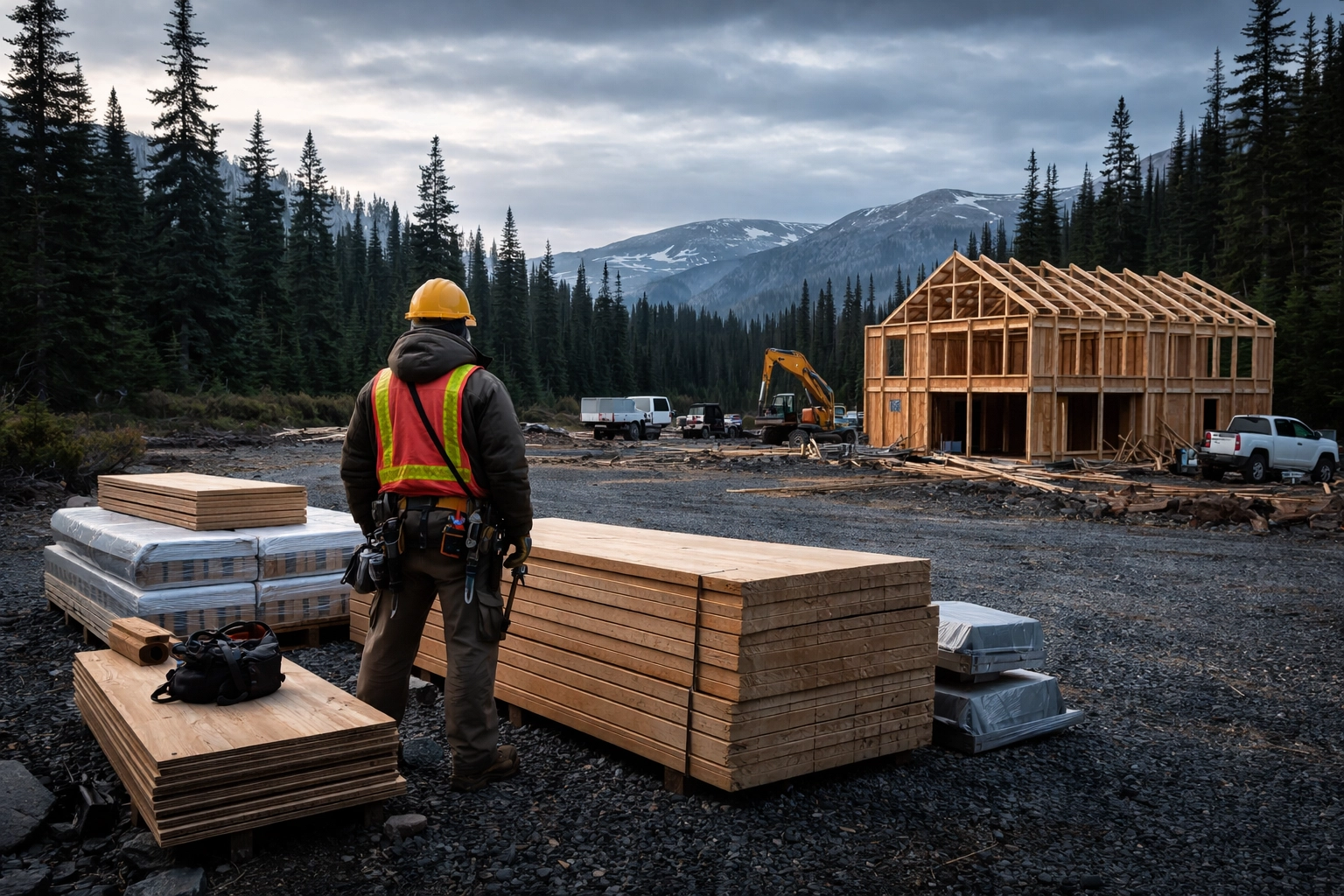
Blanket policies for multiple projects
If you're running several jobs at once, you don't need a separate policy for each one. Blanket Builders Risk policies can cover multiple policies and let you cover multiple projects under one policy, which simplifies your admin and can save money.
Who buys the policy?
This depends on the contract. Sometimes the property owner buys it. Sometimes the GC does.
Read the contract carefully. If you're expected to provide Builders Risk coverage and you don't, you could be on the hook for a major loss: even if it wasn't your fault.
For Homeowners: Why You Shouldn't Assume You're Covered
If you're building a new home or doing a major renovation, you might assume your homeowner's insurance has you covered.
It probably doesn't.
Most homeowner's policies are designed to protect a completed, occupied home: not a construction site. Once the walls come down or the foundation gets poured, you're in a gray area.
What could go wrong?
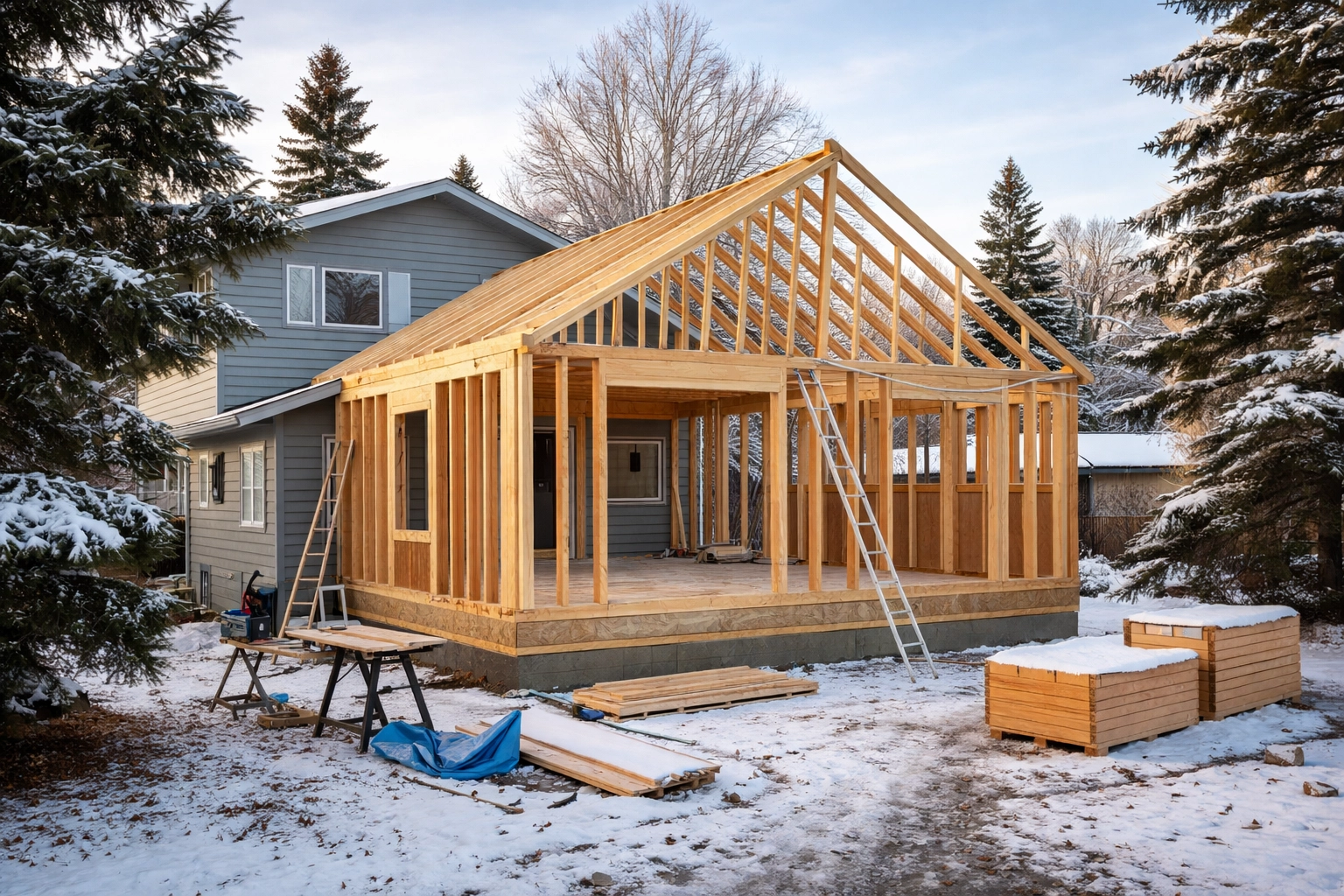
Let's say you're adding a second story to your Anchorage home. Midway through framing, a windstorm rolls in and damages the exposed structure. Or a pile of lumber disappears overnight.
Your homeowner's policy may deny the claim because:
- The structure wasn't complete
- The home wasn't occupied
- Construction materials weren't covered
Builders Risk fills that gap.
When do you need it?
You should consider Builders Risk if you're:
- Building a new home from the ground up
- Doing a major addition or renovation
- Gutting and rebuilding part of your home
- Building a detached structure (like a garage, shop, or ADU)
Even smaller remodels can fall outside your homeowner's coverage if the scope is big enough. When in doubt, ask.
Whatever you decide, make sure you get the insurance details in writing. Knowing exactly who is responsible for the coverage before the project starts saves a lot of headaches later.
Installation Floaters and Materials in Transit: Two Key Add-Ons
Here's where Builders Risk connects to something we touched on in our Inland Marine coverage discussion: Installation Floaters and Materials in Transit.
Installation Floaters
An Installation Floater covers equipment and materials that are being installed as part of a construction project. Think HVAC systems, appliances, fixtures, or specialty equipment.
Once those items leave the supplier and head to your job site, they're in a vulnerable window. They're not covered by the supplier anymore, and they're not yet part of a finished building.
An Installation Floater bridges that gap: covering the items while they're:
- In transit
- Stored on-site (or off-site)
- Being installed
This is especially useful in Alaska, where materials often travel long distances before reaching the job.
Materials in Transit
This coverage protects building materials while they're being shipped to the project location.
In the Lower 48, a shipment might travel a few hundred miles by truck. In Alaska, materials might be:
- Barged up from Seattle
- Flown into a remote village
- Trucked hundreds of miles on prior roads
The longer and more complex the journey, the more that can go wrong. Materials in Transit coverage helps make sure you're not eating the cost if something gets lost, damaged, or stolen along the way.
Alaska-Specific Considerations
Builders Risk in Alaska isn't one-size-fits-all. The state's unique conditions mean you'll want to pay attention to a few things:
Earthquake coverage
Alaska sits on one of the most seismically active zones in the country. Standard Builders Risk policies may not include earthquake coverage automatically. If your project is near a fault line (and many are), make sure earthquake is added.
Flood and water damage
Coastal areas, river zones, and areas prone to snowmelt flooding may need separate flood coverage. Check whether your policy includes or excludes water damage.
Theft at remote sites
Materials left at remote job sites can be vulnerable to theft: especially if there's no one around for miles. Make sure your policy covers theft, and consider what security measures (cameras, fencing, lighting) might help reduce your risk.
Weather delays
Some policies offer coverage for "soft costs" caused by weather-related delays. In a state where winter can shut down work for months, this can be a valuable add-on.
What Builders Risk Does NOT Cover
Like all insurance, Builders Risk has limits. Common exclusions include:
- Faulty workmanship, design, or materials (the policy covers the result of a covered peril, not bad work)
- Employee theft (that's a different coverage)
- Wear and tear or gradual deterioration
- Damage from flooding or earthquakes (unless specifically added)
- Worker injuries (you need Workers' Comp for that)
Make sure you understand what's excluded before you sign.
Final Thought: Protect the Work Before It's Done
A construction project represents months of planning, effort, and investment. Builders Risk Insurance helps make sure a single storm, fire, or theft doesn't wipe all of that out.
Whether you're a contractor managing multiple jobs across Alaska or a homeowner building your forever home, it's worth understanding what's covered: and what's not.
If you're not sure whether your current coverage protects your project, reach out to Last Frontier Insurance. We'll help you figure out the right fit for your situation( without overcomplicating it.)
Leave a Reply