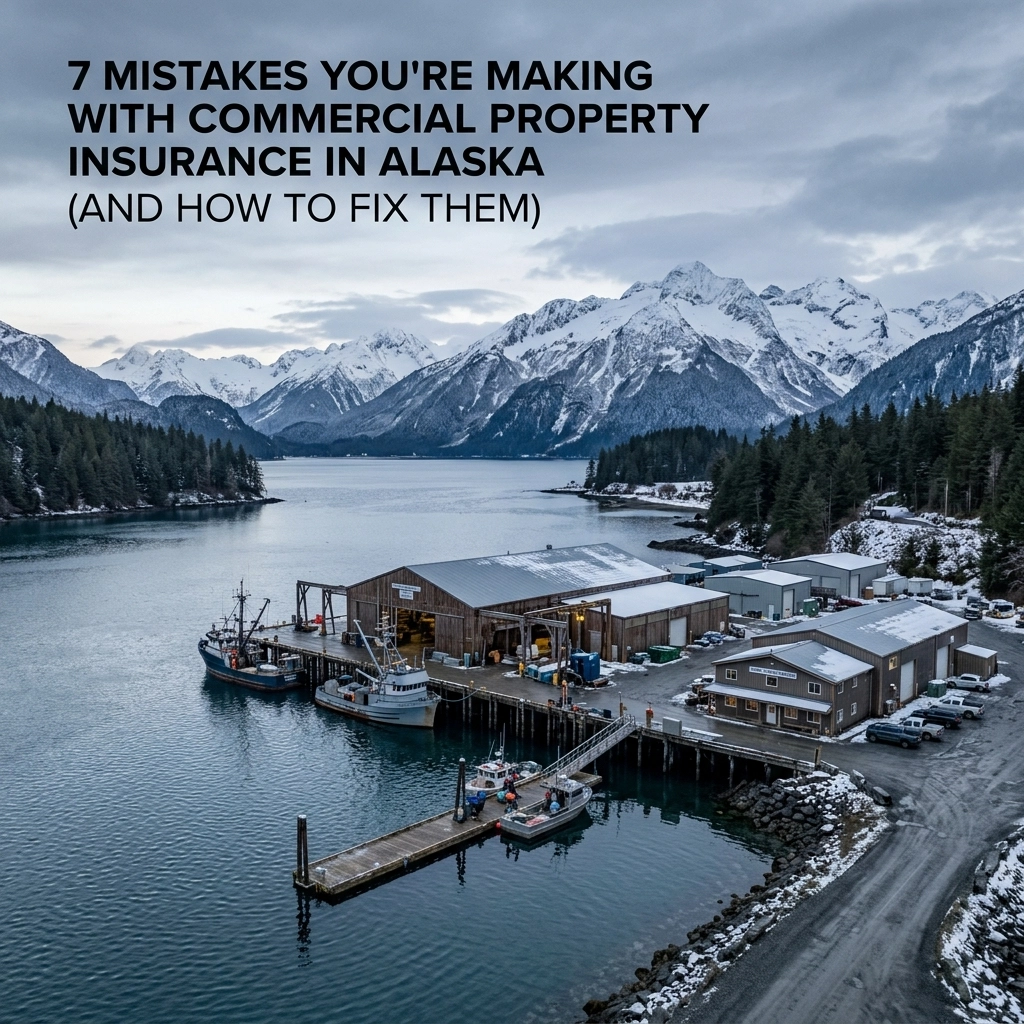
Running a business in Alaska is an adventure every single day.
Between the stunning mountain views and the occasional moose wandering through the parking lot, there is nowhere else like the Last Frontier.
But as a business owner here, you know that our unique landscape comes with some unique headaches.
One of the biggest hurdles is getting your commercial property insurance alaska coverage just right.
It is easy to treat your policy like a "set it and forget it" task.
However, a small oversight today can lead to a massive financial hole tomorrow.
Let’s look at the eight most common mistakes Alaska business owners make and how you can fix them before the next storm rolls in.
1. Undervaluing Replacement Costs
The biggest mistake we see is business owners insuring their buildings for what they paid for them years ago.
In the Lower 48, construction costs are relatively predictable.
In Alaska, we have what many call the "Alaska Tax."
Every piece of lumber, every steel beam, and every specialized piece of equipment often has to come up via barge or the ALCAN.
If your building burns down, the cost to rebuild is going to be significantly higher than the original purchase price or even the current market value.

The Fix:
Talk to your agent about a "Replacement Cost" valuation rather than "Actual Cash Value."
Make sure your limits reflect the actual cost of shipping materials and hiring labor in today’s Alaska market.
It is better to have a slightly higher premium than to find out you are $200,000 short when you need to rebuild.
2. Forgetting Earthquake Coverage
We live on the Ring of Fire, and we feel it quite often.
Many Alaska business owners assume that "all-risk" commercial property insurance covers everything, including the ground shaking.
In reality, standard policies almost always exclude earthquake damage.
If a major quake hits and your foundation cracks or your walls shift, a standard policy won't help you.
Given our history with seismic activity, this is a gap you simply cannot afford to have.
The Fix:
Ask specifically for an earthquake endorsement or a separate earthquake policy.
While it adds to your costs, it provides essential protection for your biggest physical asset.
You can also look into your deductibles for these events, as they often work differently than your standard fire deductible.
3. Not Accounting for Snow Load or Frozen Pipes
Our winters are long, beautiful, and sometimes incredibly heavy.
Snow load is a serious threat to Alaskans, especially for businesses with large, flat roofs.
Standard policies usually cover roof collapses, but the "preventable maintenance" clause can be tricky.
If your pipes freeze and burst because you didn't keep the heat at a certain level, your claim might be denied.
Water damage from frozen pipes is one of the most common claims we see during an Anchorage or Fairbanks winter.

The Fix:
Review your policy for specific requirements regarding winter maintenance.
Ensure you have a plan for snow removal and that your heating systems are monitored.
Check out our Homeowners Guide: Wear and Tear vs. Sudden Loss for a better understanding of how insurance companies view maintenance issues.
4. Gaps in Business Interruption Coverage
If your shop or office is damaged, the physical repairs are only half the battle.
How do you pay your employees while the doors are closed?
How do you cover your lost profits or your ongoing mortgage payments?
Many business owners forget to include or adequately fund their business interruption insurance.
In Alaska, rebuilding can take twice as long because of our short construction season and shipping delays.
The Fix:
Calculate your "worst-case scenario" downtime and ensure your coverage lasts at least 12 to 18 months.
You can find more details on how this works at Business Interruption: What Happens If Your Doors Have to Close.
Make sure your business insurance alaska package includes enough "extra expense" coverage to help you set up at a temporary location if needed.
5. Keeping Outdated Inventory Lists
You probably bought new computers, specialized tools, or heavy machinery over the last year.
Did you tell your insurance company?
If your inventory lists are outdated, you are essentially self-insuring those new items.
If a fire or theft occurs, you can only claim what is documented and covered under your policy limits.
An outdated list is a recipe for a heartbreaking claim process.

The Fix:
Set a calendar reminder every six months to update your equipment and inventory list.
Take photos or videos of your space and store them in the cloud.
This makes the claims process much smoother and ensures you get every penny you are owed.
6. Ignoring ‘Ordinance or Law’ Coverage
Many Alaska towns have beautiful, historic buildings that have stood for decades.
However, building codes change constantly.
If your older building is damaged, the city might require you to bring the entire structure up to modern codes during the repair process.
Standard property insurance only pays to put things back exactly how they were.
They won't pay for the extra costs of new electrical wiring, fire sprinklers, or ADA-compliant ramps required by law.
The Fix:
Add "Ordinance or Law" coverage to your policy.
This covers the increased cost of construction to comply with modern building ordinances.
It is a small price to pay to avoid a massive out-of-pocket expense during a rebuild.
7. Falling Into the Aging Building Trap
This is one of the biggest mistakes business owners make when comparing commercial property insurance alaska options.
If your building is between 18 and 25 years old and you have had a gap in coverage, many insurance companies may only offer Actual Cash Value (ACV) instead of Replacement Cost.
That means depreciation gets deducted from your claim payout.
If you have a serious loss, you could be left paying a large share of the rebuild cost out of pocket.
To qualify for full Replacement Cost with many carriers, the "Big Four" usually need to be updated.
That means your roof, HVAC, electrical, and plumbing all need to show they have been maintained or replaced within acceptable timeframes.
If even one of those major systems is outdated, your options can shrink fast.
The Fix:
Review the age and condition of your building before you shop or renew coverage.
Ask your agent whether your property qualifies for Replacement Cost or if a prior lapse in coverage could push you into ACV.
If your roof, HVAC, electrical, or plumbing are older, make a plan to update them and keep records of the work.
That simple step can make a major difference in how well your building is protected after a claim.
8. Not Bundling with Liability
Some owners try to piece together their insurance like a jigsaw puzzle from different companies.
While you might think this saves money, it often creates "gray areas" where neither company wants to take responsibility for a claim.
If a customer gets hurt because of a property defect, is it a property claim or a liability claim?
Separate policies can lead to finger-pointing and delayed payouts.
Bundling your property and liability insurance alaska is usually the smartest move.

The Fix:
Look into a Business Owner’s Policy (BOP).
This combines property and liability into one neat package, often at a better price than buying them separately.
You can learn about the different types of liability at Product Liability vs. General Liability.
Protecting Your Peace of Mind
At Last Frontier Insurance LLC, we know that your business is more than just a building.
It is your livelihood and your contribution to our local community.
Taking the time to fix these seven mistakes ensures that your hard work is protected against the unexpected.
Whether it is a burst pipe in January or a seismic shift in the middle of the night, you deserve to know you are covered.
If you aren't sure where your policy stands, we are here to help you navigate the fine print.
Alaska is a tough place to do business, but with the right protection, you can focus on what you do best.
Give us a shout if you want to review your current coverage and make sure your business is ready for whatever the Last Frontier throws at it next.
Leave a Reply